
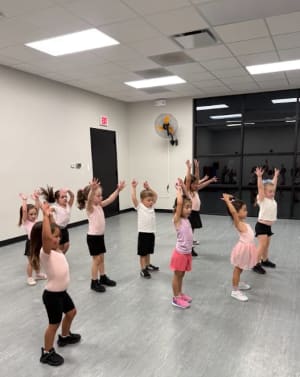
If you're getting ready to enroll your preschooler in dance, you may have noticed that many studios require children to be potty-trained before joining class. At first, that requirement can feel surprising. After all, every child develops at their own pace, and potty training is a big milestone that doesn't happen on the same timeline for every family. So why does it matter for dance? The answer isn't about independence for independence's sake. In our experience, being potty-trained often goes hand in hand with other developmental skills that help children feel successful in a structured dance class. Over the years, we've noticed something interesting. Children who are fully potty-trained are often ready for many of the same expectations they'll experience in class. They tend to be more comfortable separating from a parent, following routines, listening to directions, and participating independently. That doesn't mean potty training causes these skills, or that children who aren't potty-trained aren't capable. Every child develops differently. It's simply a milestone that often happens around the same time as other signs of readiness for a structured classroom environment. Some parents picture preschool dance as free play or simply moving around to music. In reality, even our youngest classes have a solid structure. Children learn how to line up, take turns, listen to their teacher, move safely through the room, and practice age-appropriate dance skills. They begin developing coordination, balance, rhythm, and body awareness while learning how to participate as part of a group. These routines help children build confidence because they know what to expect each week. When a child needs frequent bathroom assistance or diaper changes, it can interrupt both their learning and the flow of class for everyone. Dance studios are busy places. Teachers are actively instructing, classes are constantly starting and ending, and staff members are greeting arriving families, assisting students, and preparing for the next class. Because everyone has responsibilities during class time, our staff members aren't able to leave a group of children to change a diaper or provide ongoing bathroom care. For the safety of every student, teachers need to remain focused on supervising the entire class. That's one of the biggest reasons many structured preschool programs—including dance classes—ask children to be potty-trained before enrolling. If your child isn't quite there yet, that's completely okay. There's no "right" age to finish potty training, and every family reaches this milestone differently. We've seen children who were ready shortly after turning two, while others needed much more time. Waiting until your child is fully ready doesn't put them behind. In fact, it often sets them up for a more positive first dance experience because they're able to focus on learning instead of worrying about bathroom accidents or needing extra assistance. Sometimes waiting just a few more months makes a big difference in a child's confidence. The first years of dance aren't about perfect pirouettes or memorizing long routines. They're about helping children build the skills they'll continue using as they grow. In preschool classes, students work on: Gross motor skill development Balance and coordination Listening and following directions Taking turns Waiting patiently Building confidence Becoming comfortable in a classroom setting When children are developmentally ready for these expectations, they tend to enjoy class more because they can fully participate alongside their classmates. Potty training isn't about checking a box before dance class. It's one of several signs that a child may be ready for the routines, independence, and structure that come with learning in a group setting. Every child reaches that point in their own time, and there's no benefit to rushing the process. When children begin dancing after they're developmentally ready, they're often able to focus on what really matters—learning new skills, building confidence, making friends, and discovering how much fun dance can be. If you're wondering whether your preschooler is ready for class, we'd be happy to help you decide. Sometimes a simple conversation is all it takes to find the right time to begin.Potty Training Often Reflects Developmental Readiness
Dance Class Is More Structured Than Many Parents Expect
Safety Is Also an Important Consideration
Every Child Has Their Own Timeline
Preschool Dance Is About Building Foundational Skills
Final Thoughts